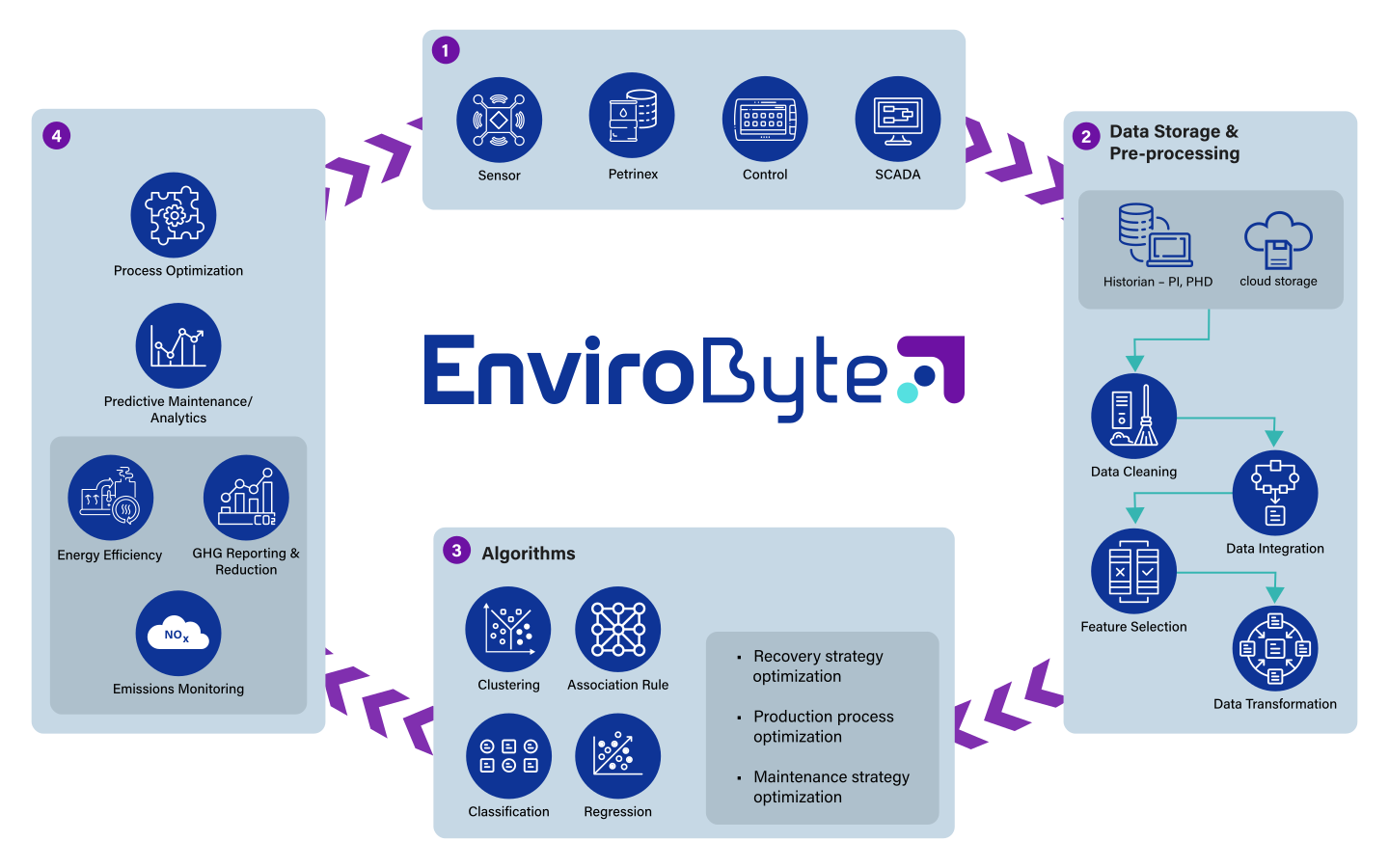
Data Integration and Ingestion
EmissionX® can be integrated with your existing systems to provide real-time data and insights for GHG monitoring and management.
Introduction
As global awareness of climate change intensifies, the importance of monitoring and managing greenhouse gas (GHG) emissions has never been more critical. Industries across the board are now required to track and report their carbon footprints to comply with regulations and meet sustainability goals. Effective data integration and ingestion processes are essential for accurate greenhouse gas reporting and management. This article delves into the components, challenges, and best practices for these processes, highlighting their significance in the broader context of environmental stewardship.
The Significance of Greenhouse Gas Reporting
Greenhouse gas reporting is vital for several reasons:
- Regulatory Compliance: Governments worldwide mandate GHG reporting to monitor and control emissions, ensuring that industries adhere to environmental standards.
- Sustainability Goals: Companies set sustainability targets to reduce their carbon footprints, aligning with global efforts to combat climate change.
- Transparency and Accountability: Accurate reporting fosters transparency, allowing stakeholders to hold organizations accountable for their environmental impact.
- Risk Management: Understanding emission patterns helps in identifying risks and developing strategies to mitigate the environmental impact.
Key Components of Data Integration and Ingestion for GHG Reporting
1. Data Sources:
- Emission Sensors: Devices that measure emissions from various sources, including industrial processes, transportation, and energy consumption.
- Energy Usage Data: Information on electricity, fuel, and other energy sources used by an organization.
- Production Data: Metrics related to the production processes that contribute to emissions.
- Third-Party Data: Data from external sources such as weather conditions, which can influence emission levels.
2. Data Collection:
- IoT Devices: Internet of Things devices connected to emission sources for real-time data collection.
- APIs: Application Programming Interfaces that facilitate data exchange between different systems and platforms.
- Manual Logs: Human-recorded data, especially from smaller or less automated facilities.
- Historian: SCADA/DCS continuously monitors sensor/meter data and sends to data storage system, such as PI.
3. Data Storage:
- Databases: Structured storage solutions for organized data management.
- Data Warehouses: Central repositories for storing large volumes of data from various sources.
- Data Lakes: Systems for storing vast amounts of raw data in its native format.
4. Data Processing:
- ETL (Extract, Transform, Load): Processes that extract data from sources, transform it into a standardized format, and load it into storage systems.
- Real-Time Processing: Techniques for immediate data processing and analysis.
5. Data Analytics and Reporting:
- BI Tools: Business Intelligence tools that provide visualizations and reporting capabilities for analyzing emission data.
- Machine Learning Models: Advanced analytics for predicting future emissions and identifying trends.
Our Solutions
There are a few common challenges in GHG Data Integration and Ingestion
- Data Silos: Disparate systems can lead to isolated data, making comprehensive analysis challenging.
Solution: Adopt integrated platforms and APIs to facilitate data flow. - Data Volume and Variety: Managing diverse and large datasets can be overwhelming.
Solution: Utilize data lakes and scalable storage solutions to handle the complexity. - Data Latency: Delays in data processing can hinder timely reporting.
Solution: Implement real-time data processing frameworks. - Data Quality: Inaccurate or incomplete data can compromise reporting accuracy.
Solution: Establish robust data governance and validation procedures.